
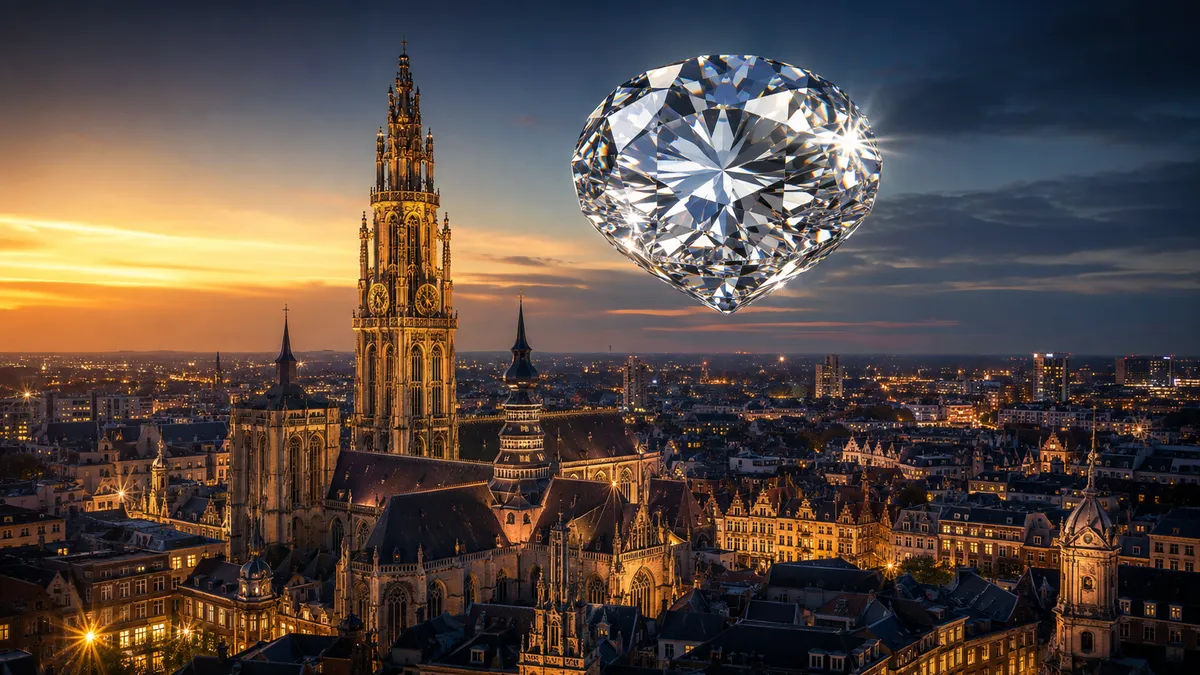
For most of human history, diamonds didn't sparkle.
They were treasured for being the hardest thing anyone had ever found, but they were dim compared to what you see in a jewelry case today. Nobody had worked out how to open a diamond up to the light. That changed in the 1470s, in a Flemish workshop, when a cutter named Lodewyk van Bercken realized something no one before him had: a diamond can only be cut by another diamond.
The city where that happened is Antwerp. Nearly six hundred years later, it's still the place the world's diamonds pass through.
And on October 2, Tom is flying there to choose one for you.
The Man Who Invented Sparkle
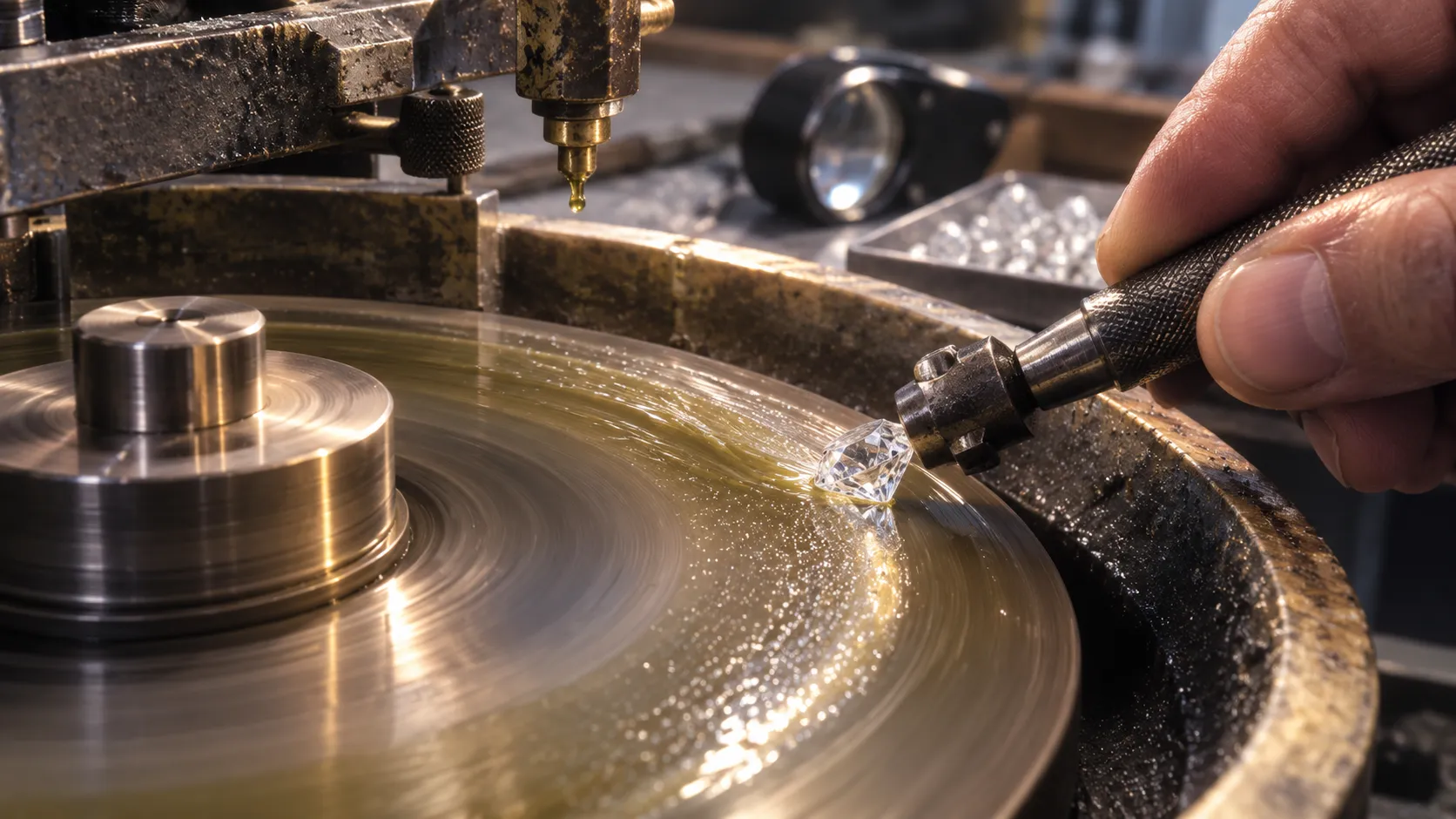
A polishing wheel, unchanged in principle since the 1470s.
Van Bercken's answer was a spinning polishing wheel called a scaif, dressed with a mixture of olive oil and diamond dust. It sounds almost too simple, and it changed everything. For the first time, a cutter could place facets exactly where he wanted them, at matched angles, on every side of a stone.
He called the idea absolute symmetry. It's the reason a diamond throws light back at you instead of simply sitting there, and it's the foundation of every cut that came after it. Every round brilliant in our cases, and very likely the one on your hand, traces back to that workshop.
So Antwerp didn't just become the diamond capital of the world. Antwerp is where sparkle was invented.
The Diamond Capital of the World
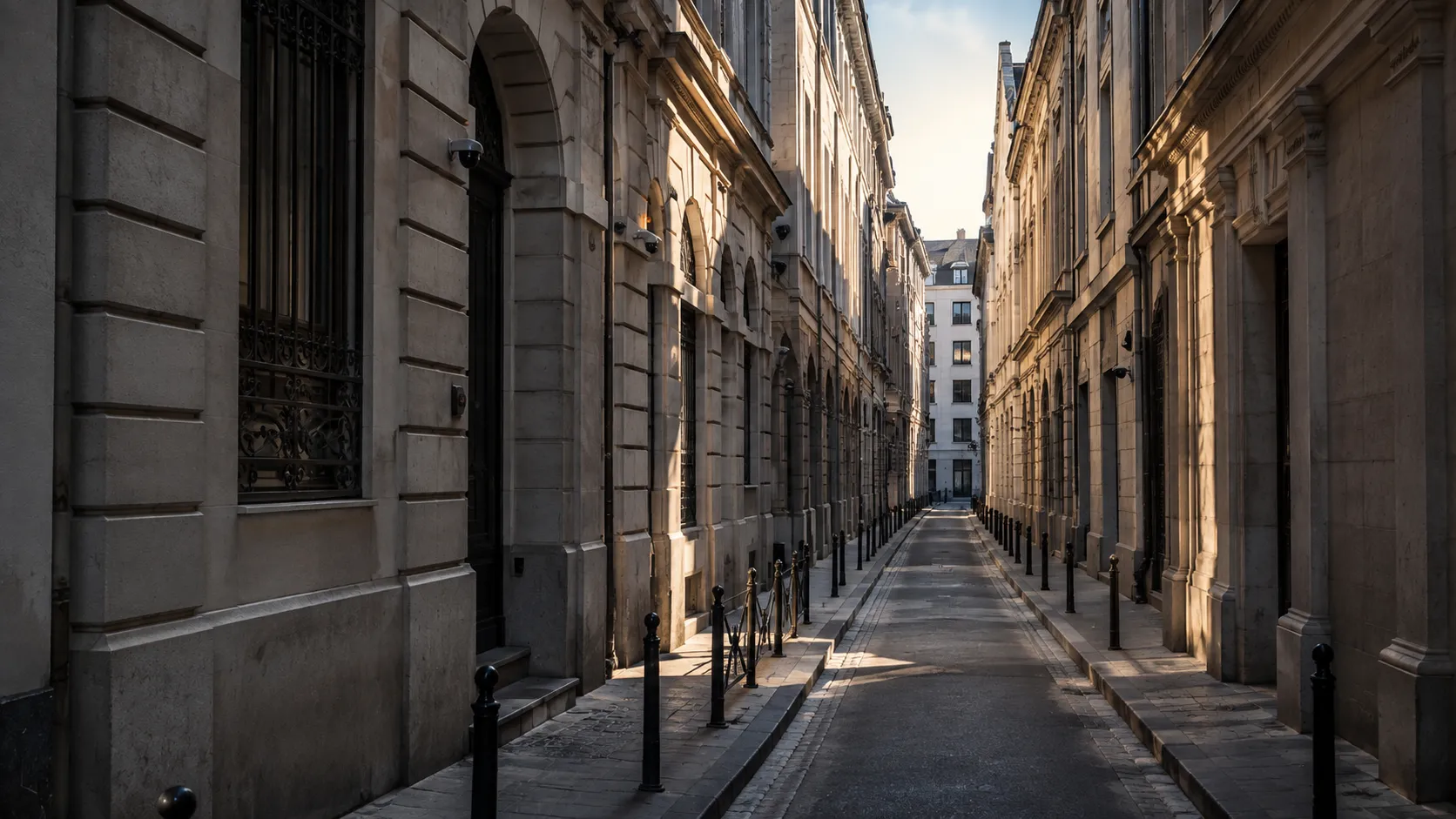
Hoveniersstraat, the guarded street at the heart of Antwerp's diamond district.
Antwerp has been trading diamonds since 1447, which makes the trade older than the country it sits in. Empires have risen and fallen since then, and two world wars passed through the city, but the diamonds never left.
Today that entire world still fits inside roughly one square mile behind Antwerp's Central Station. A handful of streets, more than 1,300 diamond companies, four trading bourses, and close to $19 billion moving in and out every year. There are no display windows. Most of the doors don't even have signs. It's the most valuable neighborhood on earth, and you could walk right through it without noticing.
FUN FACT: Inside Antwerp's bourses, deals worth millions are still closed with a handshake and two words: "mazal u'bracha," Hebrew for "luck and blessing." Nothing gets signed. Your word is the contract, and if you break it, you never trade in that room again.
A Diamond Can't Be Chosen From a List
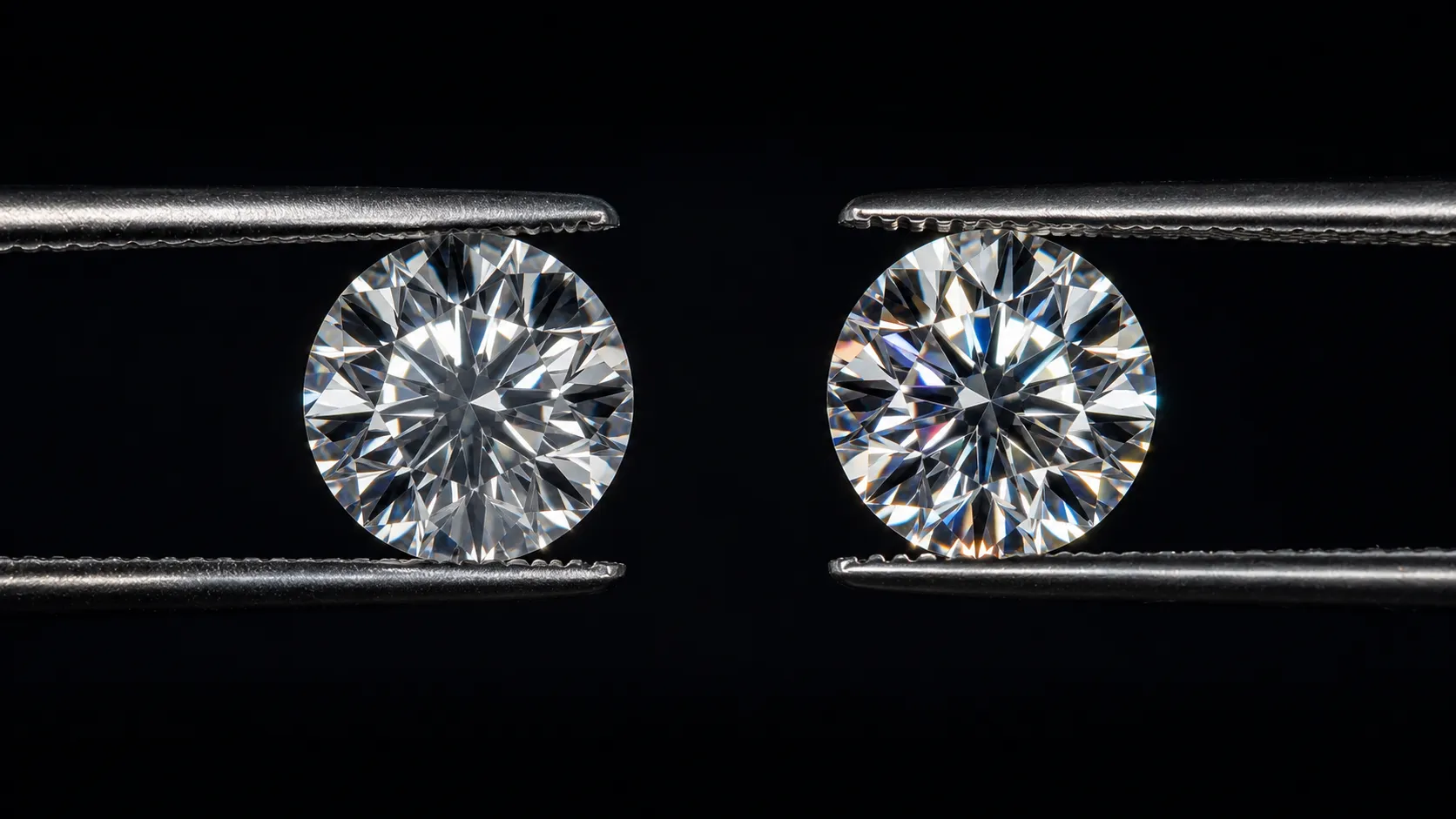
Two diamonds. Identical certificates. Very different stones.
Here's how most diamonds in America are sold today. A customer names a budget. Someone pulls up a virtual inventory of thousands of stones the store has never seen, sitting in a warehouse somewhere, and sorts by price. A row of numbers gets picked. The stone ships. Nobody in the whole transaction has ever laid eyes on it.
The numbers are real and they matter. But a grading report measures a diamond. It doesn't describe one.
Put two stones side by side with matching certificates, same carat weight, same color, same clarity, and one of them will very often be visibly more alive than the other. Cut quality lives in fractions of a degree. So does the way a stone behaves when a hand moves, when someone laughs, when the light shifts across a dinner table. None of that fits in a column.
That's the whole reason Tom goes. When you ask us to hand-select your diamond in Antwerp, someone who has spent his career looking at stones stands in that cool northern light, picks them up one at a time, and turns them.
What Tom Is Actually Looking For
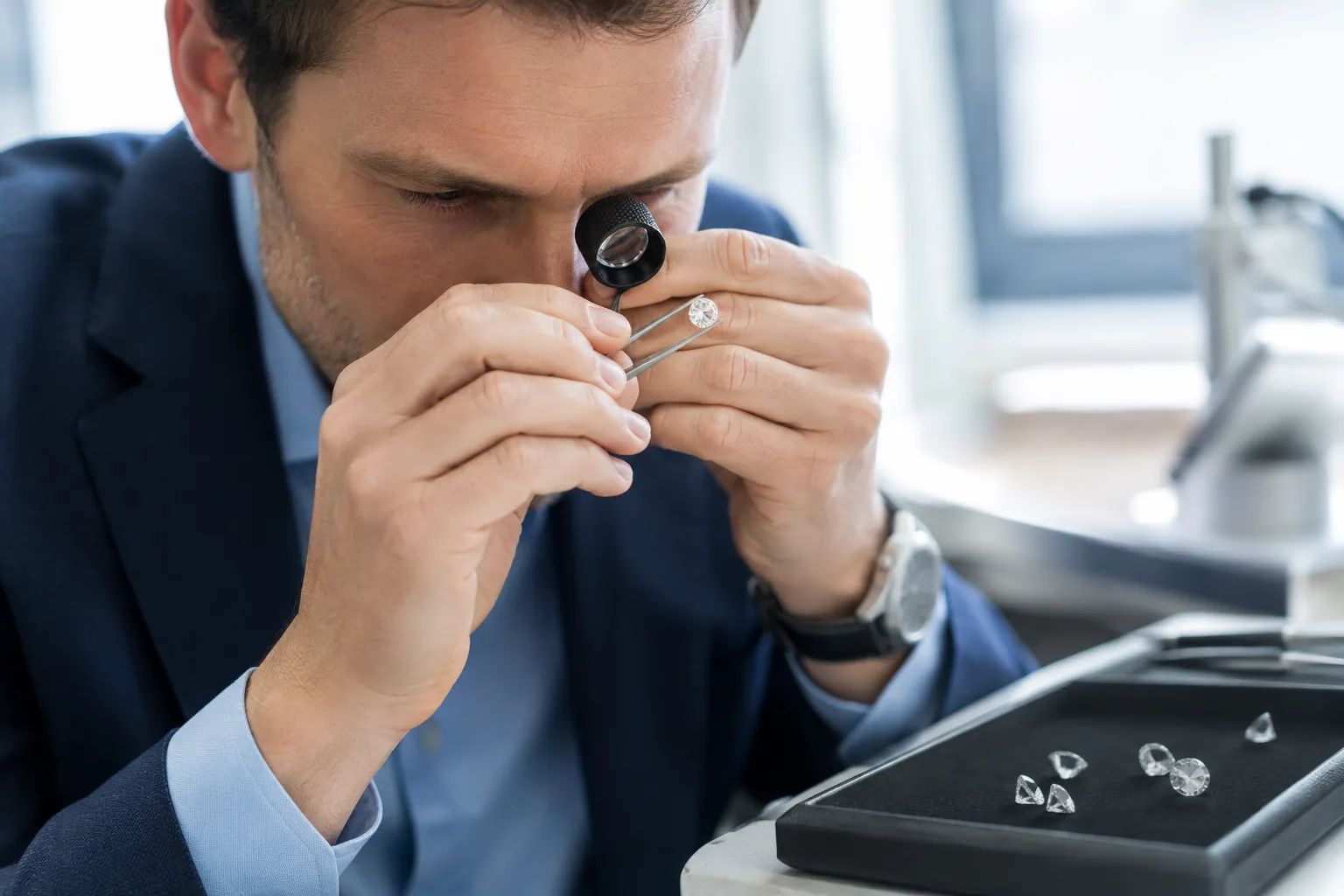
Judged by eye, in cool northern light, the way it's always been done.
He's looking for life. Fire, which is the flashes of color. Brilliance, the white light that comes straight back at you. Scintillation, the way a stone flickers as it moves. Some diamonds simply have more personality than others, and after enough years you stop needing to explain why. You just know within a few seconds which stone in the parcel is the one.
He's also looking for the stones that are genuinely hard to find. Rare fancy-color diamonds, the soft pinks and warm yellows, don't show up on a search filter and arrive next week. They surface once, in one parcel, in one office in Antwerp, and if you're not standing there, someone else takes them home.
And he's looking for you specifically. If you've told us you want a cushion cut with real warmth for an engagement ring, or a matched pair for studs, or something with a little more size than you thought you could reach, that request travels with him.
Formed Once, and Never Again
A natural diamond took somewhere between one and three billion years to happen. It formed about a hundred miles beneath our feet, under heat and pressure that no longer exist in that part of the earth, and it reached the surface riding a kind of volcanic eruption that stopped happening long before anything walked upright.
That isn't a marketing line. It's a fact about the object, and it means every natural stone is a one-time event. The particular arrangement inside the one you choose has never existed before, and it won't happen again.
Which is a fitting thing to put on someone's hand. Whether the stone becomes a solitaire, a pair of earrings, or something our custom design team builds around it from a sketch, it stays what it is: one of one. You're also welcome to browse the loose diamonds already in the case to get a feel for what you love before you tell him what to hunt for.
Before He Boards the Plane
This is the part that matters, and it has a date on it.
Tom leaves for Antwerp on October 2, 2026. Anything we know before he goes, he can look for. Anything we learn after he lands waits a year for the next trip.
You don't need to know the exact stone. Most people don't. A shape you keep coming back to, a rough budget, the occasion, and roughly when you need it is plenty to send him in with. He looks. If he finds something worth your attention, we'll call you, and you decide in person, in your hands, in our light.
Tell Tom what to look for before October 2. It takes about two minutes, and it's the difference between choosing from a list and having a diamond chosen for you.
See the Sparkle in Person
Our team at J. Thomas Jewelers, at 2254 Crooks Road in Rochester Hills, would love to talk it through with you and give you honest answers about what your budget will really buy in Antwerp.
Schedule an appointment, call us at (248) 299-5250, or simply stop by. We are here Tuesday through Friday 10:00–5:30 and Saturday 10:00–4:00.
We Make Love Rock.®